


The New Due Diligence: How Geopolitics is Reshaping Software Procurement

Updated: Dec 10, 2025

For decades, the criteria for purchasing enterprise software were relatively straightforward. Decision-makers evaluated features, price, scalability, and the quality of customer support. The origin of the code or the physical location of the vendor’s headquarters was rarely a top priority. The digital world felt borderless, and globalization meant the best tool won regardless of where it was built.
f
That era is effectively over. Today, the geopolitical landscape is arguably the most disruptive force in technology procurement. Rising nationalism, trade protectionism, and a fracturing global internet have turned easy software purchases into complex risk assessments.
For CTOs, CIOs, and procurement leaders, ignoring the geopolitical dimension of a software vendor is no longer an option. A product that looks perfect on a feature spreadsheet may carry unacceptable risks once its origin and data flows are scrutinized.
Here is how global politics is actively changing how companies buy technology.
The Data Sovereignty Minefield
The most immediate impact of geopolitics on software buying is the question of data jurisdiction. Where your data rests determines which government claims the legal right to access it.
In the past, a company might gladly use a US-based cloud provider for global operations. However, regulations like the US CLOUD Act, which allows federal law enforcement to compel US tech companies to provide data stored on foreign servers, have made international clients nervous.
Conversely, the European Union’s GDPR (General Data Protection Regulation) imposes strict rules on how the data of EU citizens is handled and transferred outside the bloc. More recently, the EU AI Act is setting global standards for artificial intelligence deployment.
When purchasing software, buyers must now map the data flow. Does this SaaS platform process data in a nation with adversarial relations to your home country? Does the vendor’s home government have a history of demanding backdoor access to corporate data? If the answer is unclear, the compliance risk often outweighs the technical benefits.

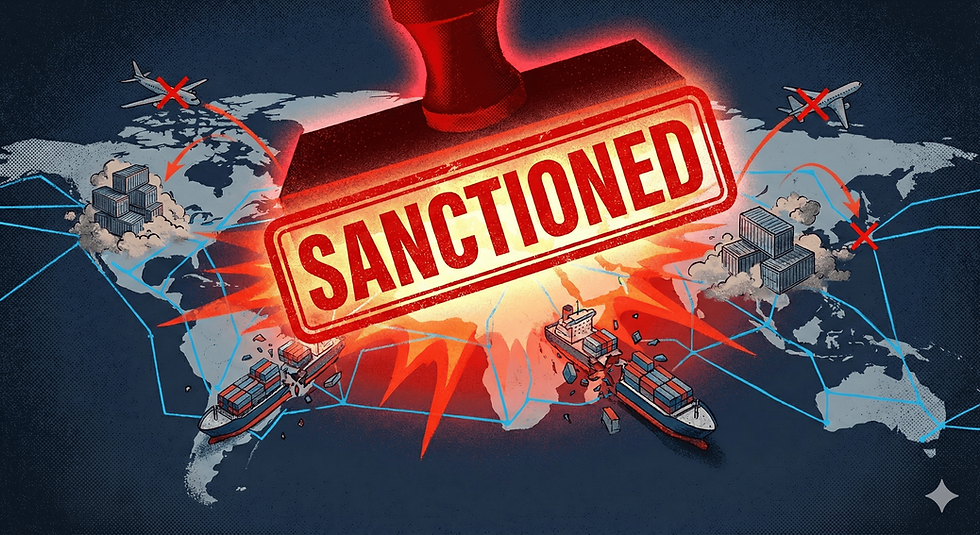
The Sanction and Supply Chain Shockwave
Software has become a primary lever in modern trade statecraft. Governments increasingly use sanctions and "entity lists" to restrict the flow of technology to geopolitical rivals.
This creates immense operational risk for buyers. A vendor you rely on today could be blacklisted tomorrow. If a foreign government decides a specific software company is a national security threat, it can effectively ban its operation or prohibit its own companies from doing business with it.
We have seen this with hardware manufacturers in recent years, but software is equally vulnerable. If your critical project management tool or cybersecurity platform is suddenly barred from receiving updates or processing payments due to new sanctions, your business continuity is threatened.
Procurement teams must now assess the political stability of the vendor’s home base and the likelihood of them becoming a target in a trade war.
The Splinternet and Diverging Standards
The vision of a single, unified global internet is fading. What is emerging instead is the "Splinternet"—a digital world fragmented into distinct geopolitical blocs with different rules, standards, and dominant players. China has its own highly developed, insular digital ecosystem. The West has another. Other regions are attempting to carve out their own paths.
This fragmentation complicates software decisions for multinational companies. A CRM that integrates seamlessly with the dominant marketing tools in North America might be completely incompatible with the digital ecosystem required to do business in East Asia.
Companies are increasingly forced to decide between two difficult options. They can either adopt a fractured stack, using different software vendors for different geopolitical regions, or they can attempt to find a "neutral" vendor that can operate across divides, which is becoming harder to find.

The New Procurement Reality
The injection of geopolitics into tech buying means that due diligence has changed. Vetting a vendor’s technical API documentation is no longer enough. You must also vet their corporate structure and data supply chain.
Does a foreign entity with ties to a hostile government hold a significant minority stake in the vendor? Does their end-user license agreement allow them to change data storage locations without notice?
For modern tech leaders, political awareness is now a professional requirement. The decision of which software to buy is not just about optimizing workflow; it is about insulating the organization from the shocks of a volatile world map.


This article highlights an important shift in how businesses evaluate technology vendors. The discussion around data sovereignty, sanctions, supply-chain risks, and the Splinternet shows why procurement teams now need to look beyond features and pricing when choosing technology. The point about assessing a vendor’s corporate structure and data flows is particularly relevant for organizations making long-term IT investments. For companies also evaluating physical infrastructure alongside software, https://www.orangehardwares.com/ offers another useful resource for hardware procurement considerations.